
About Us
It embraces respect for human dignity, social solidarity, cultural diversity, a consciousness of shared life, and social responsibility as the fundamental principles of all its activities.
INTERNATIONAL HARAKANI CULTURE FOUNDATION
We believe that the enduring values which strengthen the bond between people, society, and culture are the most important foundation of strong societies. Drawing inspiration from a deep-rooted civilizational heritage, the International Harakani Culture Foundation continues its work as an institution that protects cultural heritage, encourages the production of knowledge, supports social development, and builds sustainable collaborations around shared values across different geographies.
Taking its name, vision, and mission from the Harakani Model of Civilization, the International Harakani Culture Foundation aims to contribute to the cultural development of society through the preservation of historical heritage, the perpetuation of cultural values, support for scientific and academic study, educational activities, publishing, research, art and culture projects, and national and international collaborations. It regards bringing the knowledge and experience inherited from the past together with the needs of our age, and passing it on to future generations, as one of its fundamental responsibilities. For this model is a teaching that points not only to a person remaining civilized within outward life, but also to being civilized inwardly in their responsibilities toward their Creator. While it refers to outward life through the importance of the intellect being present in society with an understanding far removed from egocentrism and individualism, and on the contrary one that prioritizes and values the human being, it refers to inward life through Harakānī’s ethic of altruism. This ethic of altruism is of great importance for the stable and measured development of a society. The healing power that lies in people respecting the understandings of others and valuing different ideas helps social life remain dynamic and alive. The human being likewise stands at the center of our foundation’s work. It embraces respect for human dignity, social solidarity, cultural diversity, a consciousness of shared life, and social responsibility as the fundamental principles of all its activities. It regards differences of belief, thought, language, culture, and geography not as grounds for division, but as the richness of mutual understanding, of producing together, and of building a shared future.
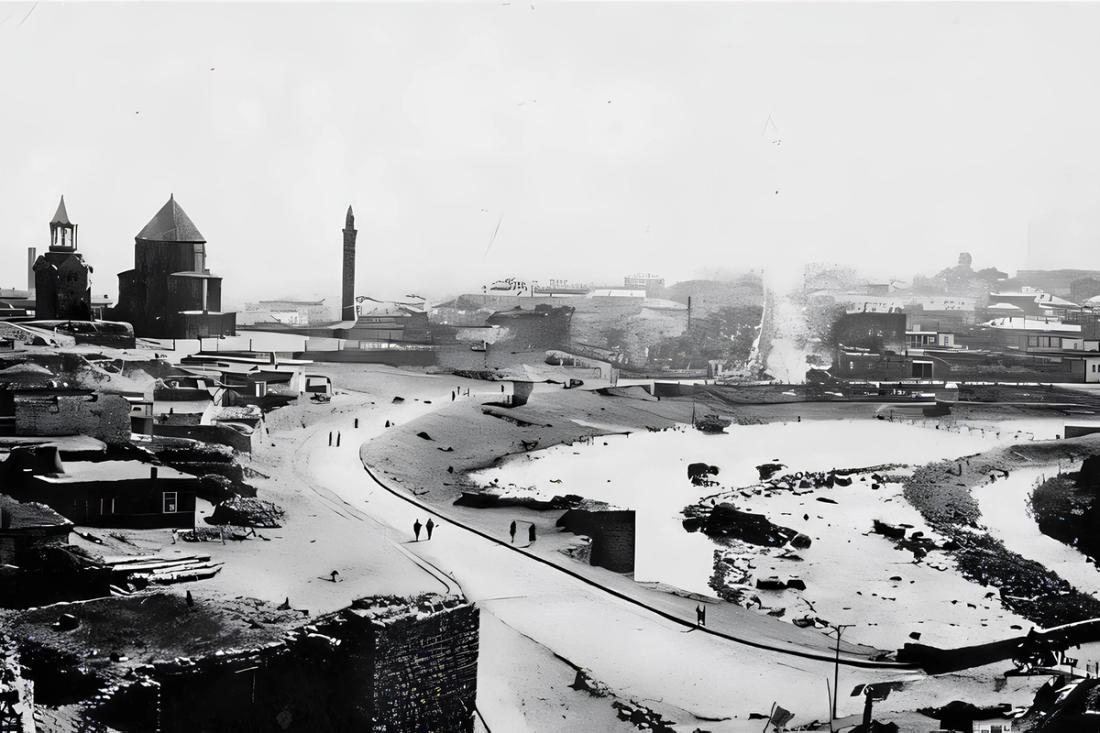
The waqf system emerged as a product of high moral values such as providing benefit to others, meeting the needs of society, and elevating human dignity. In the Seljuk and Ottoman periods as well, the conquest of land alone was not considered sufficient; the soul of cities was built by establishing great foundations grounded in knowledge, culture, and social solidarity. Mosques, madrasas, zawiyas, imarets, and hospitals are the works of this understanding of endowment. One of these important works is the endowment deed of the zawiya of Shaykh al-Hakan Hazrat Abū’l-Hasan al-Harakānī, commissioned by Sultan Murad III, the twelfth Ottoman sultan, during the rebuilding of Kars. According to archival sources, the endowment deed dated 26 Dhu al-Qa‘dah 999 / 15 September 1591, drawn up exactly 557 years after the death of Abū’l-Hasan al-Harakānī, had its foundations laid in 1033; it was, however, restructured many times in the centuries that followed. This demonstrates that the foundation is not merely a historical structure, but a living culture of endowment that renews itself according to changing conditions. Although its services were interrupted at times from the date of its first establishment onward, it was revived in every period, and with these renewals the scope of the endowment deed was also expanded. In the Ottoman period in particular, the tomb and mosque structures adjacent to the zawiya were also included in the foundation, reinforcing its institutional structure. This shows that the foundation was not only a religious structure, but had also become a powerful institution shaping social and cultural life.
As the International Harakānī Culture Foundation, we resolutely continue our work in order to keep alive the tradition of social solidarity and mutual aid, and we consider it our duty to support those in need through the projects we carry out within this framework. The spirituality of Harakānī has for centuries been the symbol of the unity of our nation and our state. No heart that has turned to this door for the sake of God has ever been sent away empty, nor will it ever be. For:
“Service to humanity is reverence to God.”